Many species can see light with frequencies outside the human "visible spectrum". Bees and many other insects can detect ultraviolet light, which helps them find nectar in flowers. Plant species that depend on insect pollination may owe reproductive success to their appearance in ultraviolet light rather than how colorful they appear to humans. Birds, too, can see into the ultraviolet (300–400 nm), and some have sex-dependent markings on their plumage that are visible only in the ultraviolet range.
Showing posts with label Spectrum. Show all posts
History of Visible spectrum
In the 13th century, Roger Bacon theorized that rainbows were produced by a similar process to the passage of light through glass or crystal.
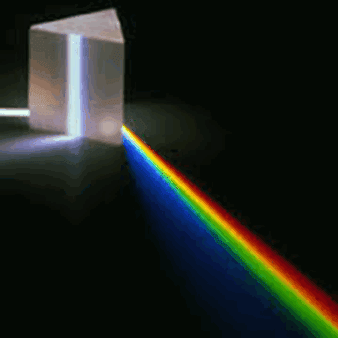
In the 17th century, Isaac Newton discovered that prisms could disassemble and reassemble white light, and described the phenomenon in his book Opticks. He was the first to use the word spectrum (Latin for "appearance" or "apparition") in this sense in print in 1671 in describing his experiments in optics. Newton observed that, when a narrow beam of sunlight strikes the face of a glass prism at an angle, some is reflected and some of the beam passes into and through the glass, emerging as different-colored bands.
Visible spectrum
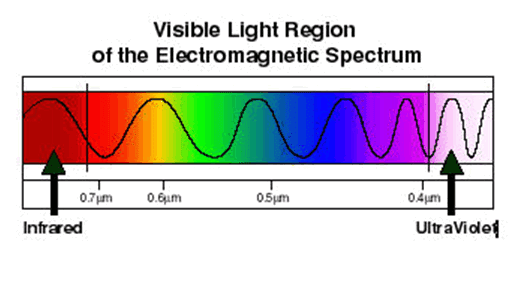
The visible spectrum is the portion of the electromagnetic spectrum that is visible to (can be detected by) the human eye. Electromagnetic radiation in this range of wavelengths is called visible light or simply light. A typical human eye will respond to wavelengths from about 390 to 700 nm. In terms of frequency, this corresponds to a band in the vicinity of 430–790 THz.
Electromagnetic Spectrum
A spectrum (plural spectra or spectrums) is a condition that is not limited to a specific set of values but can vary infinitely within a continuum. The word was first used scientifically within the field of optics to describe the rainbow of colors in visible light when separated using a prism. As scientific understanding of light advanced, it came to apply to the entire electromagnetic spectrum.
Subscribe to:
Posts (Atom)
You may Like this
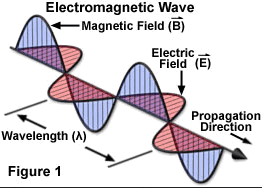
Electromagnetic radiation
Electromagnetic radiation (EM radiation or EMR) is a fundamental phenomenon of electromagnetism...
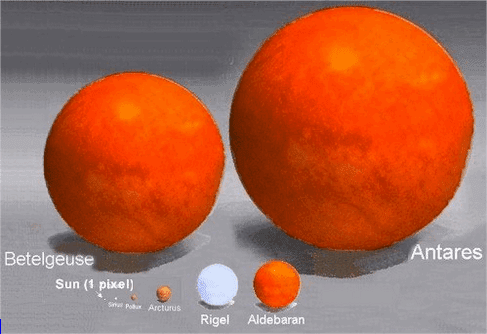
Massive stars
During their helium-burning phase, very high-mass stars with more than nine solar masses expand to form red supergiants...
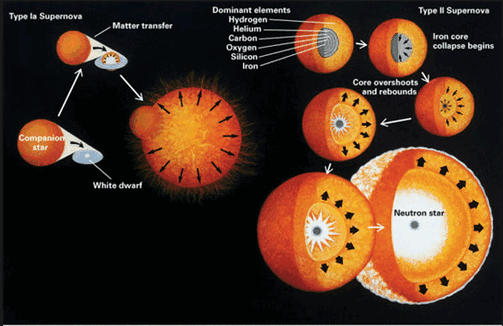
Stars Collapse
As a star's core shrinks, the intensity of radiation from that surface increases, creating such radiation pressure...
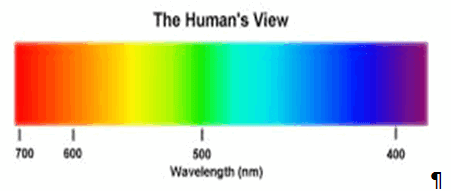
Animal color vision
Many species can see light with frequencies outside the human "visible spectrum"...
Visible spectrum
The visible spectrum is the portion of the electromagnetic spectrum that is visible to (can be detected by) the human eye...
Electromagnetic Spectrum
A spectrum (plural spectra or spectrums) is a condition that is not limited to a specific set of values...


