Showing posts with label Spectroscopy. Show all posts

Radio spectroscopy

Radio astronomy was founded with the work of Karl Jansky in the early 1930s, while working for Bell Labs. He built a radio antenna to look at potential sources of interference for transatlantic radio transmissions. One of the sources of noise discovered came not from Earth, but from the center of the Milky Way, in the constellation Sagittarius. In 1942, JS Hey captured the sun's radio frequency using military radar receivers.

Optical spectroscopy

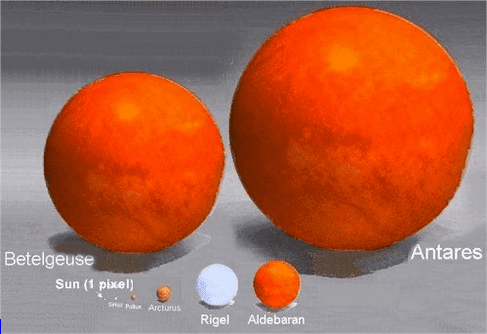
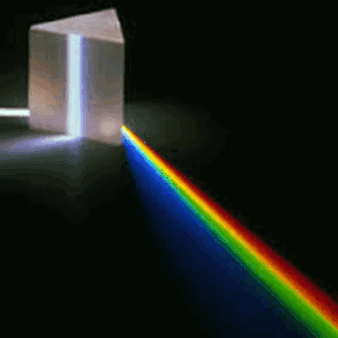
Physicists have been looking at the solar spectrum since Isaac Newton first used a simple prism to observe the refractive properties of light. In the early 1800s Joseph von Fraunhofer used his skills as a glass maker to create very pure prisms, which allowed him to observe 574 dark lines in a seemingly continuous spectrum. Soon after he combined telescope and prism to observe the spectrum of Venus, the Moon, Mars, and various stars such as Betelgeuse; his company continued to manufacture and sell high-quality refracting telescopes based on his original designs until its closure in 1884.

Astronomical spectroscopy

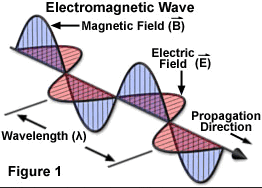
Astronomical spectroscopy is the study of astronomy using the techniques of spectroscopy to measure the spectrum of electromagnetic radiation, including visible light, which radiates from stars and other hot celestial objects. Spectroscopy can be used to derive many properties of distant stars and galaxies, such as their chemical composition, temperature, density, mass, distance, luminosity, and relative motion using Doppler shift measurements.

Atomic spectroscopy

Atomic spectroscopy was the first application of spectroscopy developed. Atomic absorption spectroscopy (AAS) and atomic emission spectroscopy (AES) involve visible and ultraviolet light. These absorptions and emissions, often referred to as atomic spectral lines, are due to electronic transitions of outer shell electrons as they rise and fall from one electron orbit to another. Atoms also have distinct x-ray spectra that are attributable to the excitation of inner shell electrons to excited states.

Instrument Spectrograph

The MEGARA spectrograph will be located on one of the telescope two Nasmyth platforms, and the optical fiber bundles will be routed from the Folded Cassegrain focus to the entrance of the spectrograph at the pseudo-slit position. MEGARA has a fully refractive optical system. The spectrograph is composed by a pseudo-slit, where the fibers are placed simulating a long slit 119 mm length and with a RoC of 1075 mm. Then the light passes through the collimator, which is composed by 5 lenses and has a focal length of 483 mm, and a slit shutter placed behind the first collimator lens. The geometry is fixed for all spectral resolution modes and it is 68 degrees between collimator and camera. The pupil has 160 mm diameter and it is the location for the VPH-gratings.

Theory of the Spectroscopy and spectrography

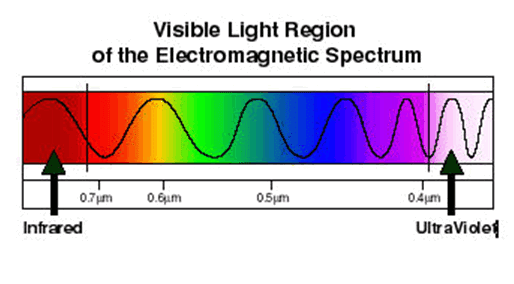
One of the central concepts in spectroscopy is a resonance and its corresponding resonant frequency. Resonances were first characterized in mechanical systems such as pendulums. Mechanical systems that vibrate or oscillate will experience large amplitude oscillations when they are driven at their resonant frequency. A plot of amplitude vs. excitation frequency will have a peak centered at the resonance frequency. This plot is one type of spectrum, with the peak often referred to as a spectral line, and most spectral lines have a similar appearance.

Spectroscopy and spectrography

Spectroscopy and spectrography are terms used to refer to the measurement of radiation intensity as a function of wavelength and are often used to describe experimental spectroscopic methods. Spectral measurement devices are referred to as spectrometers, spectrophotometers, spectrographs or spectral analyzers.

Spectroscopy

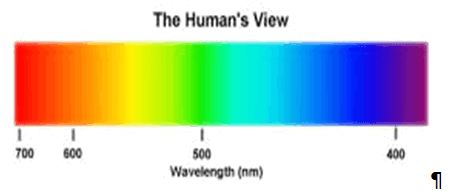
Spectroscopy is the study of objects based on the spectrum of color they emit, absorb or reflect. Spectroscopy is an important investigative tool in astronomy, where scientists use it to analyze the properties of distant objects. Typically, astronomical spectroscopy uses high-dispersion diffraction gratings to observe spectra at very high spectral resolutions. Helium was first detected by analysis of the spectrum of the sun. Chemical elements can be detected in astronomical objects by emission lines and absorption lines.

You may Like this

Labels